- Many people's first reaction when quitting is not to change their environment, but to download tools
- Tools can be helpers or stressors, depending on how you use them
- Those who use them well often have very simple tools
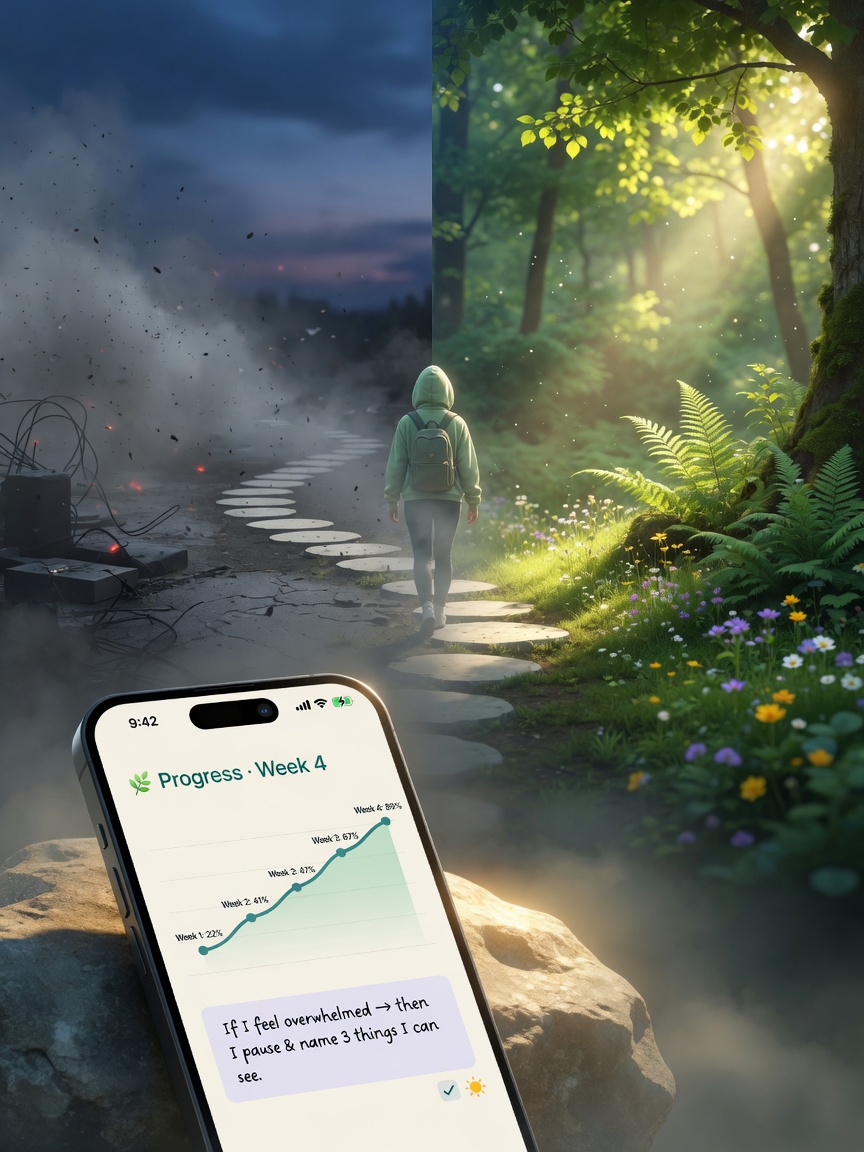
Smoking Cessation Communities, Check-in & Tracking Tools: Recommendations and Usage Tips
Many people's first reaction when quitting smoking is not to change their environment, but to download tools.
Install two smoking cessation apps on your phone, join a "Smoke-Free Today" group on WeChat, and create a check-in table in your notes. Day 1: check in, take a screenshot, report "D1" in the group. Day 3: too many notifications, group messages too noisy, all muted. Day 7: slip up and have one cigarette, the consecutive days count on the app resets to zero, and you feel as if the system has judged you—"You failed again."
Thus the tool turns from helper into a second source of stress. Delete the app, leave the group, swear "next time I'll rely entirely on willpower," and the cycle restarts.
This article does not stack a "best app ranking," but helps you do three things:
1. First think clearly about what problem the tool should solve, then choose;
2. Understand check-in apps, community types, and recording methods by category (including common domestic and international options);
3. Focus on usage tips: how to actually use them well, rather than formalistically "completing a check-in."
Disclaimer: This article is a health science popularization and behavioral method explanation, and does not constitute individual diagnosis, prescription, or psychotherapy advice. The applications and platforms mentioned are for informational reference only; availability, functionality, and compliance requirements may vary by region and version. If you experience severe depression, suicidal thoughts, chest pain, significant chronic illness, or pregnancy-related issues, please promptly seek help from a licensed physician or a regular smoking cessation clinic.
1. What Tools Solve: Set Goals First, Then Talk About Downloads
Quitting smoking is simultaneously physiological dependence management and habit and cue rewriting. Tools themselves won't refuse cigarettes for you, but they can reduce the cost of three things:
| Need | What Tools Can Do | What Tools Cannot Do |
|---|---|---|
| ------ | ------------------- | --------------------- |
| See progress | Smoke-free days, money saved, health milestones | Replace sleep, exercise, environmental modification |
| See patterns | Craving scores, trigger tags, time and location | Automatically change the automatic post-meal smoking habit |
| Survive urges | Delay timer, alternative checklist, crisis scripts | Complete "those 10 minutes of not lighting up" for you |
| Not be isolated | Peer support, light accountability, experience exchange | Guarantee group members are always right, never compare harmfully |
An adequate support system usually covers four types of functions (no need for four apps each managing one type):
1. Progress visualization — making "how far you've gone" visible;
2. Craving and trigger recording — providing data for review, not just "checked in";
3. Immediate response — having a script when urges come;
4. Social support and accountability — someone catches you, not judges you.
Minimum Viable Tool Kit (MVP)
Better fewer but stable, than many but useless. Most people find the following set sufficient:
| Role | Example Form | Suggested Daily Time |
|---|---|---|
| ------ | ------------- | --------------------- |
| Main record | 1 dedicated cessation app or 1 page of table/notes | 2–5 minutes |
| Urge emergency | Phone memo "if-then list" + system timer | When urge strikes |
| Support | 1 decent community or 1 informed family member/peer | Limited browsing, set do-not-disturb periods |
| Optional enhancement | Habit app only for "post-meal rinsing/walking" etc. | 1–2 habits max |
Starting five check-ins and three groups simultaneously usually leads to higher failure rates: maintenance costs exceed benefits, and one missed check-in leads to total collapse.
2. Check-in Apps: How to Choose, Common Types Domestic and International
The following is organized by functional type, rather than locking onto a specific brand. App store rankings change, policies and removals change; what you need is capability, not a logo.
1. Dedicated Smoking Cessation / Addiction Apps
Typical capabilities:
- Smoke-free timer (days/hours/minutes)
- Cumulative cigarettes not smoked, money saved
- Health recovery timeline (educational milestones, individual variation large)
- Craving log, achievement badges, group rankings (some products)
Common international directions (names are for type reference only):
- Apps centered on "quit days + community" (such as QuitNow type)
- Apps emphasizing personalized plans, spending and health feedback (such as Smoke Free type)
- Apps leaning toward gamification and cognitive reappraisal (such as Kwit type)
- Resources linked to public health systems (such as NHS official cessation services in some countries, quitline materials)
Common domestic / Chinese environment directions:
- "Quit smoking check-in" and "Quit smoking assistant" type apps in app stores: timer, money saving, article check-in
- WeChat ecosystem: check-in mini-programs, official account quit camps, community check-in sheets
- "Smoking cessation" sub-module within general health apps (often limited in depth)
Best suited for: People who need to "see at a glance how long I've persisted" and enjoy light gamification feedback.
Note: The health timeline is a statistically educational milestone, not your lab report; leaderboards easily provoke comparison anxiety.
Core setup suggestions:
- Fill in start date, daily cigarette count, and price per pack as truthfully as possible — the saved money figure only motivates if real;
- Turn off meaningless hourly vibrations and keep only personal high-risk period reminders (e.g., after work, after meals, before bed);
- If the product supports "craving recording," be sure to turn it on — this is more useful than consecutive days alone.
2. General Habit Tracking Apps
Typical capabilities: Habit list, consecutive days, calendar heatmap, reminders, basic stats.
Suitable scenarios: You already know that "quitting smoking" needs to be broken into executable micro-habits, for example:
- Wash dishes / rinse mouth / go out for a 5-minute walk immediately after meals
- Open windows for ventilation in the morning
- Do "4-7-8 breathing" or drink water when craving hits
Usage tip: Don't make "Didn't smoke today" your only habit slot — it's too coarse, only all-black or all-white when you fail. It's better to check in on alternative behaviors and high-risk responses, using smoke-free results as a weekly review metric.
3. Diary / Emotion / Note Apps
Typical capabilities: Free writing, tags, emotion scoring, search history.
Suitable scenarios: Complex triggers (work stress, intimate relationships, social drinking) where you need to write down "what happened at that moment."
Use your phone's built-in notes app, any note-taking app, or a paper notebook — the lower the friction, the better.
Recommended fixed fields (copy and use):
Date and time:
Craving intensity (0–10):
Location / Person / Activity:
Emotion (one word):
Physical state (tired/hungry/sleepy, etc.):
What I did to cope:
Result (held through / slipped one / relapsed):
One rule to improve next time:
4. Spreadsheets and "Anti-Pretty" Tools
Many people end up staying with Excel / phone notes / paper on the wall because of zero learning cost, privacy, and customizable fields.
Weekly view example:
| Date | Smoke-free? | Max Craving | Main Trigger | Used Coping Strategy? | Notes |
|---|---|---|---|---|---|
| ------ | ------------ | ------------- | -------------- | ---------------------- | ------- |
| Mon | Yes | 6 | After meal | Yes-walk | |
| Tue | Slipped | 9 | Drinking party | No | Need to write if-then |
Principle: The highest standard for a recording system is not looking good, but you being willing to use it consistently for 14 days.
5. Quick Selection Table
| Your Situation | Preferred Type | Use with Caution |
|---|---|---|
| --------------- | --------------- | ------------------ |
| Easily lonely, need encouragement | Cessation app with gentle community + small group | Large competitive rankings |
| Data-oriented personality | Spreadsheet + craving scores | Toy apps with badges only, no fields |
| Annoyed by too many notifications | Local timer + silent diary | Heavy push, heavy social products |
| Extremely painful in first 72 hours | Emergency list + hotline/clinic info | Complex learning curve new apps |
| Repeatedly self-abandoned due to broken streaks | Allow catch-up recording, avoid "zeroing shame" mechanics | Consecutive days hostage to self-esteem |
3. Community Types: Where to Find Support, When to Leave
The essence of community is social support and norms: making you feel "I'm not the only one holding on," sometimes also providing accountability. But communities can also bring shame, misinformation, and comparative pressure.
1. Common Types Comparison
| Type | Advantages | Risks | Suitable For |
|---|---|---|---|
| ------ | ----------- | ------- | ------------- |
| Anonymous online quit group / In-app community | Low cost to speak, rich experience | Variable quality, day comparison | People who don't want acquaintances to know |
| Topic forum / Vertical board | Long-form reviews, searchable | Outdated info, flame wars | People who enjoy reading methodologies |
| WeChat/QQ acquaintance group | Strong trust, fast response | Face pressure, relationship hostage | People with reliable friends |
| Stranger check-in camp (21-day etc.) | Ritual, quick start | Post-camp gap; variable quality for paid ones | People needing short-term launch structure |
| Hospital/CDC/formal program extension group | Relatively reliable info, can bridge to clinic | Limited slots, variable activity | People with medical needs or wanting systematic intervention |
| One-on-one peer pact | High depth, more effective than large groups | Mutual drag if partner relapses | People who can agree on clear rules |
2. Signals of a "Good Community"
- Allows discussion of slips and reviews, not just inspirational quotes and check-in screenshots;
- Maintains an open or neutral professional attitude toward medication-assisted cessation and NRT, rather than "medication = weak will";
- Has basic order: no mocking of relapsers, no spreading of extreme folk remedies;
- Admins can handle spam, recruitment pitches, and humiliating speech.
3. Red Lines for "Should Leave This Group"
- Mocking relapses, moral coercion ("You can't even quit smoking");
- Advocating complete rejection of regular medical treatment and assessment;
- MLM-style indoctrination: paying fees, recruiting, tiered check-ins;
- Group conversations turning into "ways to enjoy smoking more" or sharing tempting content;
- Every time you open the group, anxiety is noticeably higher than feeling supported.
Usage tip: Community is an optional module. If you're socially anxious + easily shamed, a private record + one informed supporter often beats a 500-person check-in group.
4. "Official Channel" Approach to Domestic and International Support Resources
Don't blindly trust a particular app brand; prioritize knowing types of official entry points:
- Local CDC, hospital cessation clinics, pharmacy-accessible counseling;
- National or regional quitlines / self-help materials on public health websites;
- WHO and multi-country clinical cessation guidelines advocate: behavioral support + medication when necessary.
Think of "community" broadly: it could be a group, a hotline, a clinic, or a family contract.
4. Recording Methods: Check-in Is Just the Tip of the Iceberg
If all you have is "Checked in today ✓," you get moral comfort, not behavioral science data. More effective recording is usually a combination of methods.
1. Smoke-Free Timer + Money Saved Ledger
- Function: Progress visibility, positive sunk cost ("I've already invested 12 days").
- Usage: Fill in real cigarette price and daily count; designate saved money for a specific purpose (travel fund, dental cleaning, family gift) to strengthen motivation.
- Pitfall: Treating the timer as the only source of self-esteem — resetting to zero leads to personality negation.
2. Craving 0–10 Scale + Trigger Tags
Suggested tags selected from a fixed set for easy weekly stats:
- Location: home/office/car/restaurant/bar
- People: alone/colleagues/family/drinking buddies
- Activity: after meal/overtime/driving/phone scrolling/after drinking
- Emotion: annoyed/empty/angry/happy/lonely
Weekly review asks only one question: What are my Top 3 triggers? Have I written strategies for them?
3. High-Risk Scenario and If-Then Plan Book
This is a record closer to "real quitting" than check-in:
If someone offers a cigarette at a dinner, then I raise my mineral water and say "My doctor told me to stop, drink one for me," and go to the restroom to wash my face for 2 minutes.
If I'm working overtime until 22:00 and want to smoke, then I first chew gum + go downstairs and walk around the building once, then reassess the craving score after 10 minutes.
Write plans on your phone's lock screen notes or on a wallet card — more useful than buried deep in an app you never open.
4. Weekly Review Table (Anti-Formalism Core)
15 minutes per week (suggest same time slot):
| Item | Fill In |
|---|---|
| ------ | --------- |
| Smoke-free days / Slip count | |
| Most high-risk scenario | |
| Most effective strategy | |
| Sleep and stress collapsed? | |
| One change for next week (only one) | |
| Need clinic/medication assessment? |
The purpose of review is to fix the system, not to write a self-criticism.
5. Paper vs Phone vs Spreadsheet
| Medium | Advantages | Disadvantages |
|---|---|---|
| -------- | ----------- | -------------- |
| Paper & pen | No notification distraction, ritual | Hard to analyze, easy to lose |
| Phone app | Reminders, visualization, portable | Easy to get addicted to notifications and comparison |
| Spreadsheet | Free fields, analyzable | Requires a bit of initial setup |
Can be mixed: App for timing, notes for triggers, spreadsheet for weekend review.
5. How to Actually Use Well: Anti-Formalism Usage Tips (Core)
Tip 1: Rewrite the Meaning of Check-in
| Formalist Script | More Useful Script |
|---|---|
| ----------------- | ------------------- |
| Checking in proves I'm a persistent good person | Checking in is collecting behavioral data |
| Broken streak = I'm a failure | Broken streak = one missing data point, I'm still in the game |
| Higher consecutive days = stronger person | Consecutive days is one indicator, strategy quality matters more |
| Only group announcements count | Private effectiveness > public performance |
When you change tools from "moral court" to "dashboard," shame decreases and adherence usually increases.
Tip 2: Build in "Catch-up" and "Slip" in Your Rules
- Allow same-day catch-up recording to avoid "one missed entry voids the whole month."
- Distinguish between lapse and relapse — an occasional cigarette is noted and stopped, not a reason to trash the whole system.
- If the app forces a reset and it devastates you, switch tools or use a more stable metric like "cumulative smoke-free hours."
Tip 3: Reminders Should Serve Behavior, Not Create Anxiety
Bad reminder: full-day pop-ups asking "Still quitting?"
Good reminder: targeted at your historical high-risk points, content is the next actionable step, e.g., "3 minutes after meal: gum + wash dishes."
Too many notifications → turned off → tool dies — that's the classic failure chain.
Tip 4: Set Boundaries for Social Display
- Public check-in suits extroverts who thrive on "being seen";
- Private recording suits those easily shamed or hurt by comments;
- Daily reporting in family group chats may become a new pressure — change to "weekly sync" or "only call for support when craving."
Tip 5: Beware of Tool Overload
Maintaining simultaneously: Cessation App A + Habit App B + Spreadsheet C + Three groups + Social media check-ins — maintenance itself becomes a second job.
Subtraction principle: Any tool unused for 7 consecutive days, uninstall or archive without guilt.
Tip 6: When Tools Fail, Change Strategy, Not Self-Attack
Failure signals:
- Only tapping check-in, never using the coping list;
- Craving scores consistently ≥8 yet never adjusting environment/medication/sleep;
- Opening the group chat makes you want to smoke or feel self-disgust.
Order of response: Simplify tools → Strengthen if-then and environmental changes → Assess need for medical help → Change community if necessary.
Don't add another complex app for "self-indulgence" when failing.
Tip 7: How to Coordinate with NRT, Clinic, Family
| Support Layer | How Tools Cooperate |
|---|---|
| --------------- | ------------------- |
| Medication/NRT (as prescribed) | Record medication timing and craving changes in diary for follow-up reference; app cannot replace dose guidance |
| Cessation clinic / Psych support | Bring the weekly review table directly — more informative than "I just lack willpower" |
| Family | Agree on "how to help" and "how not to help" (hiding cigarettes vs cold mockery) |
| Community | Handles daily companionship; medical issues still defer to professionals |
Tip 8: Don't Use "Another Nicotine Ritual" to Pretend the System Is Working
If you've just switched the check-in target from cigarettes to an unevaluated alternative, but completely skip recording triggers, changing drinking strategies, or processing emotional cues, the tool is just a cosmetic rebranding, no matter how flashy.
Whether to use any alternative path should be combined with individual health advice; the tool's job remains: expose patterns, support behavior change.
6. By Stage: How to Match Main and Auxiliary Tools
| Stage | Main Tool | Auxiliary Tool | Goal |
|---|---|---|---|
| ------- | ---------- | --------------- | ------ |
| Preparation (3–7 days before quitting) | Trigger diary (can still record while smoking) | Informational articles / official guide summaries | Identify Top triggers, write 3 if-then, modify environment |
| Peak withdrawal (~72h–2 weeks) | Emergency list + timer + single entry point | Hotline/clinic info, one support person | Survive impulse waves, ensure sleep and food basics |
| Consolidation (~2–12 weeks) | Weekly review + habit substitution check-in | Lightweight community (time-limited browsing) | Prevent drinking/pressure night slips, rebuild reward system |
| Long-term maintenance | Monthly review, tools can be minimal | Occasional community or diary revisit | Prevent complacency and major life event setbacks |
| Slip/relapse | Five-dimension review note (scene/emotion/thought/gap/strategy) | Pause competitive leaderboards | Stop loss within 48h, restart without trashing system |
Special advice for first 72 hours: Don't learn complex new software. A single card with five things — drink water, delay 10 minutes, substitute action, contact person, emergency medical signs — often beats installing three apps.
7. Common Mistakes Checklist
1. Only check in, don't change environment — cigarettes, lighter, ashtray still at hand, app can't save automatic reaching.
2. Breaking streak = self-negation — consecutive days hijack identity, one break leads to vengeful smoking.
3. Competing on days in groups — comparison shame directly triggers cravings.
4. Too detailed recording leading to abandonment — 20 fields per day, strike by day 3; fields must be sustainable.
5. Relying on community as sole support — group members online time doesn't guarantee they're there at your dinner moment.
6. All notifications on = more willpower — usually just leads to faster muting.
7. More tools = more scientific — overload is the enemy of behavior change.
8. Never review — only checkboxes, no "what to change next week."
9. Reject all medical approaches, trust only check-ins — moderate-severe dependence may need medication + behavioral support combined.
10. Perfect form, empty action — beautiful screenshots and hollow strategies are the most common self-deception.
8. A Directly Replicable "7-Day Launch Protocol"
Day 0 (Installation day, complete within 30 minutes):
1. Choose only 1 main recording tool (app or spreadsheet — pick one);
2. Write one sentence of starting motivation + cigarette price/daily quantity;
3. List Top 3 high-risk scenarios and 3 if-then plans;
4. Clear visible smoking paraphernalia and fixed smoking spots;
5. Set up 1 support channel (person or small group) and set messaging hours;
6. Save standard cessation clinic/hotline info to your contacts.
Day 1–3:
- Daily: smoke-free result + max craving score + one trigger tag (≤3 minutes);
- When urges hit: execute the emergency card only, don't open new tools.
Day 4–7:
- Add 1 alternative habit check-in (e.g., walk after meals);
- Do one weekly review on Day 7, change only one rule.
The success criterion is not "the interface is full," but: at high-risk moments you remember to use a strategy, and you're willing to open the record without fear.
9. Recommended Combinations (Roughly by Personality)
| Type | Combination | One-sentence Usage |
|---|---|---|
| ------ | ------------ | ------------------- |
| Minimalist | System clock note of smoke-free start time + memo diary | Reject all social rankings |
| Data controller | Spreadsheet craving log + weekly Top trigger perspective | Only optimize Top1 scenario on Sunday |
| Socially driven | Small quit buddy group (≤20 people) + lightweight cessation app | Group rules ban mocking relapses |
| Easily anxious | Private diary + one family member coded support | Turn off all consecutive-day shaming designs |
| Medical path parallel | Clinic follow-up notes + medication vs craving comparison table | App only as auxiliary, doctor's orders first |
10. Conclusion: Tools Are Scaffolding, Not an Exam Hall
The correct position of smoking cessation communities, check-ins, and recording tools is:
- Scaffolding — reducing cognitive load when willpower is low;
- Mirror — showing whether triggers and strategies match;
- Connection — letting you know you're not an island.
They should not be:
- An exam hall — judging your character with consecutive days;
- A stage — performing for strangers with screenshots;
- A religion — thinking that installing the right app equals having quit.
Those who use them well often have very simple tools: a timer, three if-then statements, a weekly review sheet, and one non-judgmental support source.
Formalism pursues "looking like you're quitting"; an effective system pursues "when the next urge comes, I have an action to execute."
Starting today, you can do just one thing: open your current recording tool and add two fields — "craving score" and "trigger" — that gets you closer to truly quitting than downloading a third app.
Reference Directions (Further Reading, Not Specific Data Sources Cited in This Article)
- World Health Organization (WHO) public materials and initiatives on tobacco control and cessation support;
- Framework recommendations on behavioral support, follow-up, and medication in clinical cessation guidelines from various countries;
- General principles from digital health (mHealth) and habit design regarding "reminders, feedback, and social support";
- Relapse prevention approach: identifying high-risk situations, coping skills, distinguishing lapse from relapse;
- Self-help and counseling resources provided by local CDC, hospital cessation clinics, and quitlines.
This article is an educational explanation of tools and methods; individual circumstances vary greatly. If repeated quit attempts fail, or if significant psychological distress or physical symptoms appear, please prioritize seeking professional medical help.ear, please prioritize seeking professional medical help.*
📊 Data Cards
Formalist Use
Check-in to prove willpower, consecutive days hijack self-esteem, more tools feel safer
Effective Use
Check-in to collect behavioral data, distinguish lapse from relapse, subtraction principle
- Numbers in data cards are copied from the original text, unmodified
- Community is an optional module, not mandatory
- Medical issues should be referred to professional physicians